June 11, 2023
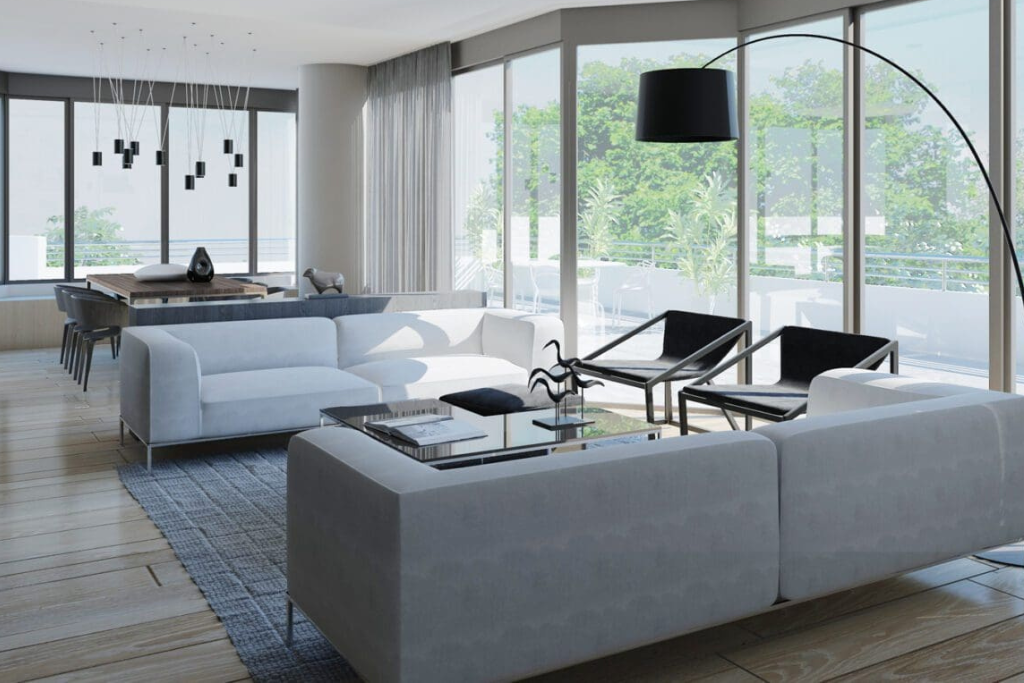
Buying an apartment in Panama is about much more than square meters, views and the asking price.
When I look at a property, I tend to see things differently. As an architect and interior designer, I immediately start thinking about how the apartment will actually feel to live in: the orientation, natural light, ventilation, proportions, existing materials and, importantly, how much work will be required to turn it into a home that functions beautifully.
If you are considering buying an apartment in Panama City—whether as your primary residence, a second home or an investment—these are some of the things I would look at before making a decision.
Location is an obvious consideration in real estate, but in Panama City it deserves particular attention.
Traffic can significantly affect your quality of life. An apartment that looks perfect on paper may feel much less attractive if your daily routine means spending hours travelling between home, work, school and the places you use most often.
I would therefore think beyond the prestige of an address. Ask yourself how the location works for your actual life.
For many of our clients, areas such as Costa del Este, Santa María, Punta Pacífica or Paitilla can all be excellent choices—but for very different reasons. The right neighborhood is the one that works with your routine, priorities and the kind of home you want to create.
In Panama's tropical climate, air conditioning is part of everyday life. But when evaluating an apartment, I still pay close attention to the possibility of opening the home and allowing air to move naturally through it.
The key is cross-ventilation.
Ideally, openings are positioned on different or adjacent sides of the apartment so that air can enter and leave the space. Apartments with windows concentrated on only one façade usually have less opportunity for natural airflow.
This is something that is difficult—and sometimes impossible—to correct later through interior design.
Higher floors may also benefit from stronger breezes, although the actual airflow depends on the building's orientation, surrounding towers and apartment layout.
When comparing two otherwise similar properties, I would always look at the windows, orientation and ventilation before being distracted by decorative finishes.
One of the things I enjoy about older apartments in Panama is that they can contain materials with surprisingly good longevity.
Granite, marble and other natural stone floors, for example, may look dated at first sight but can sometimes be restored and incorporated beautifully into a contemporary renovation.
That can be much more interesting than automatically demolishing everything.
At the same time, a relatively new apartment is not necessarily a better-finished apartment. Developer-grade flooring, cabinetry, doors, sanitary fixtures and other finishes vary enormously in quality.
Before buying, look carefully at what can be restored, retained or improved, and what genuinely needs replacing.
This matters not only aesthetically. Demolition, disposal, preparation, new materials and installation can turn what appears to be a simple cosmetic change into a significant part of a renovation budget.
As designers, we often find that the smartest renovation isn't the one that replaces the most—it is the one that understands what is worth keeping.
I also look at the architecture of the building.
Orientation, façade design, glazing and solar exposure all influence how much heat reaches an apartment. In Panama's climate, these characteristics can have a noticeable impact on thermal comfort.
Large windows and spectacular views are wonderful, but it is worth understanding which direction those windows face, how much direct sun they receive and whether the façade provides any solar protection.
These are characteristics you inherit with the property. Interior design can improve comfort considerably, but it cannot completely change the architecture of the building.
The most beautiful apartment isn't necessarily the one with the newest finishes.
Sometimes an older property with excellent proportions, good ventilation, generous windows and quality original materials can provide a much stronger foundation for a sophisticated renovation than a newer apartment with a less flexible layout.
If you're planning a significant renovation, involving an architect or interior designer before purchasing the property can also be useful. For an investment property, consider what interior design can and cannot change about a small apartment's return. We can look beyond the existing décor and help identify the potential—and limitations—of the space before you commit.
At PIEKNO Studio, we design and coordinate residential interiors and renovations in Panama with a focus on architecture, functionality, material quality and spaces that remain relevant beyond short-lived trends.
Explore our residential projects, learn about our interior design services in Panama, or contact PIEKNO Studio if you're considering purchasing and renovating a property in Panama.
We work with clients who value clarity, experience, and thoughtful design decisions. If that sounds like you, let’s talk.
Request a Design Strategy CallYour trusted source for curated news and insights.
We work with clients who value clarity, experience, and thoughtful design decisions. If that sounds like you, let’s talk.
Request a Design Strategy Call