April 4, 2023
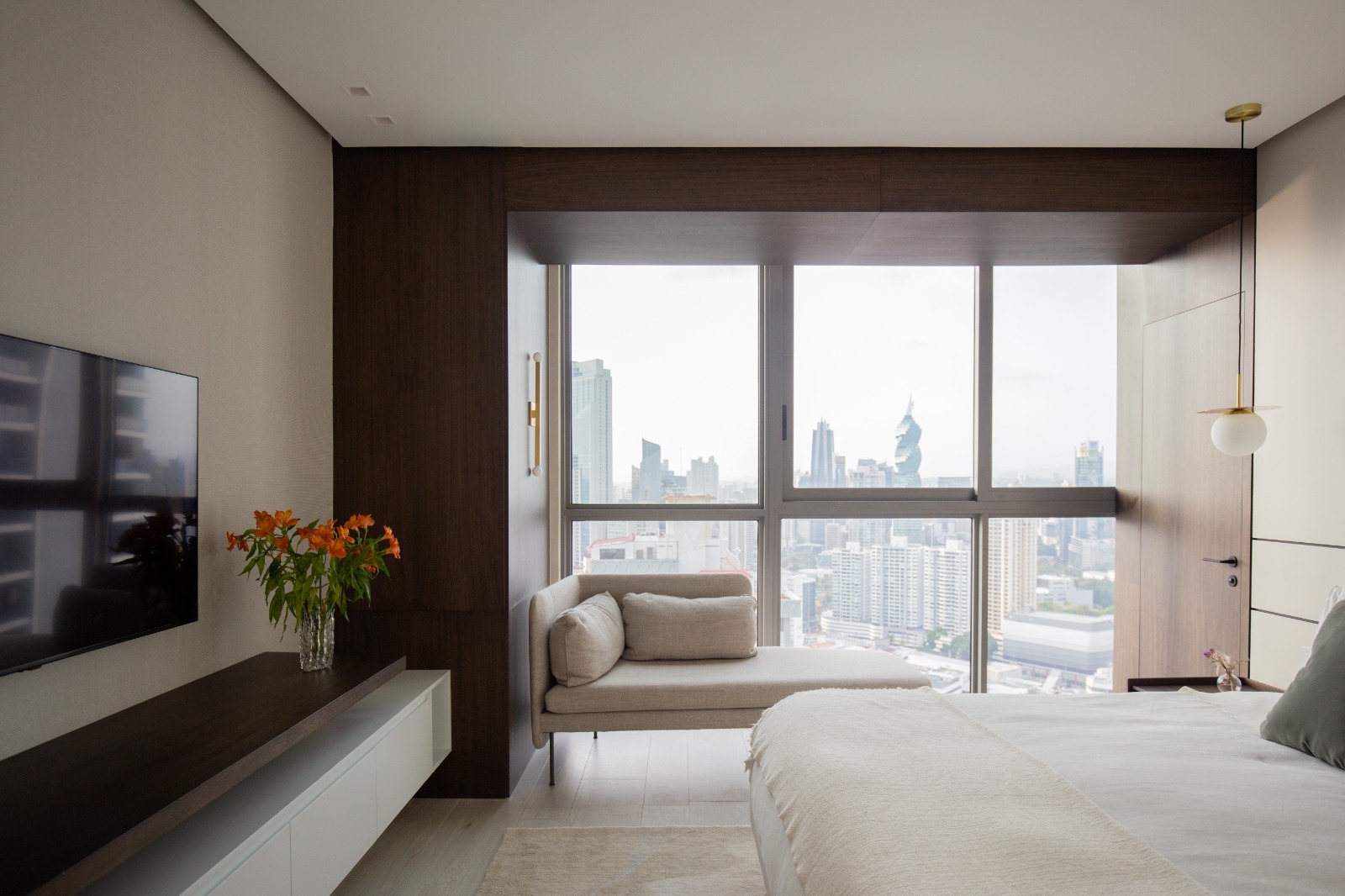
A bedroom should do one thing exceptionally well: help you slow down.
That sounds simple, but bedrooms often become a collection of unrelated decisions—beautiful headboard, decorative pendants, blackout curtains, television, bench—without considering what actually helps the person using the room rest.
I love upholstered headboards because they add softness, acoustic comfort and a comfortable surface for reading in bed.
They are not the right answer for everybody. A client with strong dust sensitivity or allergy concerns may prefer wood, leather or another easier-to-clean material. Comfort always has to be personal.
The bedroom needs bright light sometimes—for cleaning, packing or getting dressed—but that should not be the only option.
For the evening I prefer warm, dimmable and indirect lighting, plus a focused reading light for each side of the bed. Very bright light late in the evening can make it harder for some people to wind down, so the room should be able to become visually quieter at night.
Read our interior lighting guide.
Some clients sleep best in complete darkness. Others dislike waking in a room with no sense of morning.
I often design layered window treatments so the client can choose: sheer fabric for daytime privacy and softness, plus blackout when needed.
Two nightstands and balanced lighting often create a pleasant sense of order, but symmetry is a tool, not a rule. If the architecture or lifestyle asks for something else, I would rather solve the real room than force a perfectly mirrored photograph.
Personally, I don't love televisions in bedrooms. But many clients do, and the room is theirs.
If the television stays, I try to integrate it so it does not become the strongest visual element in the room. Good design is not about imposing my habits on the client.
A bench at the end of the bed can be very useful for dressing, luggage or daily routines—if there is enough circulation around it. In a smaller room, removing unnecessary furniture can feel more luxurious than filling every empty space.
For me, not excess. It is good proportions, quiet lighting, comfortable textiles, appropriate window treatments, enough storage and a room that supports sleep instead of demanding attention.
Explore our residential projects or contact PIEKNO Studio.
We work with clients who value clarity, experience, and thoughtful design decisions. If that sounds like you, let’s talk.
Request a Design Strategy CallYour trusted source for curated news and insights.
We work with clients who value clarity, experience, and thoughtful design decisions. If that sounds like you, let’s talk.
Request a Design Strategy Call