May 22, 2023
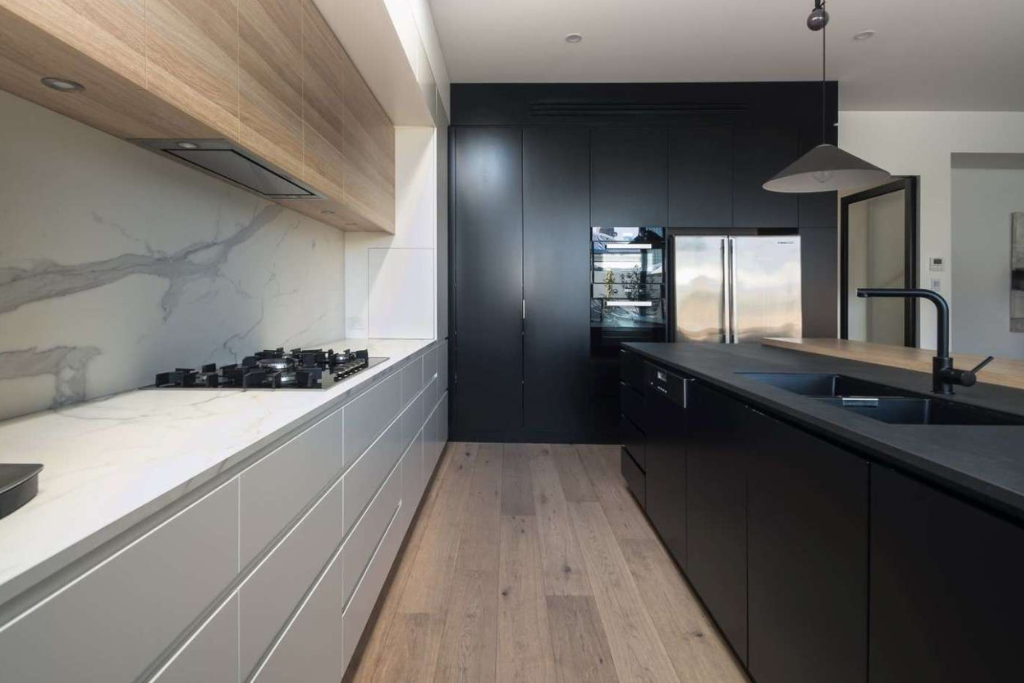
A range hood is one of those kitchen elements that has to perform technically but can easily dominate the design. My preference is usually simple: if I can integrate it beautifully, I do.
That doesn't mean every hood should disappear. Sometimes I hide the hood. Sometimes I make it the statement.
This is usually my favorite solution. The extraction unit is concealed inside cabinetry or an architectural enclosure, allowing the kitchen to read as furniture rather than a collection of appliances.
It works especially well when the cabinetry is minimal or when another element—the stone, island or lighting—should be the visual focus.
Visible chimney hoods are common and technically straightforward, but aesthetically they are rarely my first choice. When the architecture allows it, I often conceal the chimney or integrate it into a custom volume.
When cooking happens on an island, an overhead hood can become a strong object in the room. It needs to be considered together with sightlines, ceiling design and lighting—not selected at the end as an appliance.
A ceiling-integrated system can keep views open, particularly over an island. The exact performance depends on the equipment, installation height, ducting and cooking conditions, so the technical specification matters.
Downdraft systems can be visually elegant because they keep the space above the cooktop clear. They are not automatically my first choice. Cooking contaminants and warm air naturally rise, so I generally prefer effective overhead capture when the architecture allows it.
In one of our Grand Tower kitchens, the existing chimney needed to remain. Instead of pretending it wasn't there, we designed a custom red enclosure around it. The client loves color, so a technical constraint became the sculptural focal point of the kitchen.
The technical requirement doesn't disappear. It becomes part of the architecture.
The right solution depends on cooking habits, equipment, duct route, ceiling conditions and the visual concept of the room. The hood should be coordinated early with the kitchen—not added after everything else has been designed.
Read how we design kitchens that actually work, explore our projects, or contact PIEKNO Studio.
We work with clients who value clarity, experience, and thoughtful design decisions. If that sounds like you, let’s talk.
Request a Design Strategy CallYour trusted source for curated news and insights.
We work with clients who value clarity, experience, and thoughtful design decisions. If that sounds like you, let’s talk.
Request a Design Strategy Call