April 16, 2023
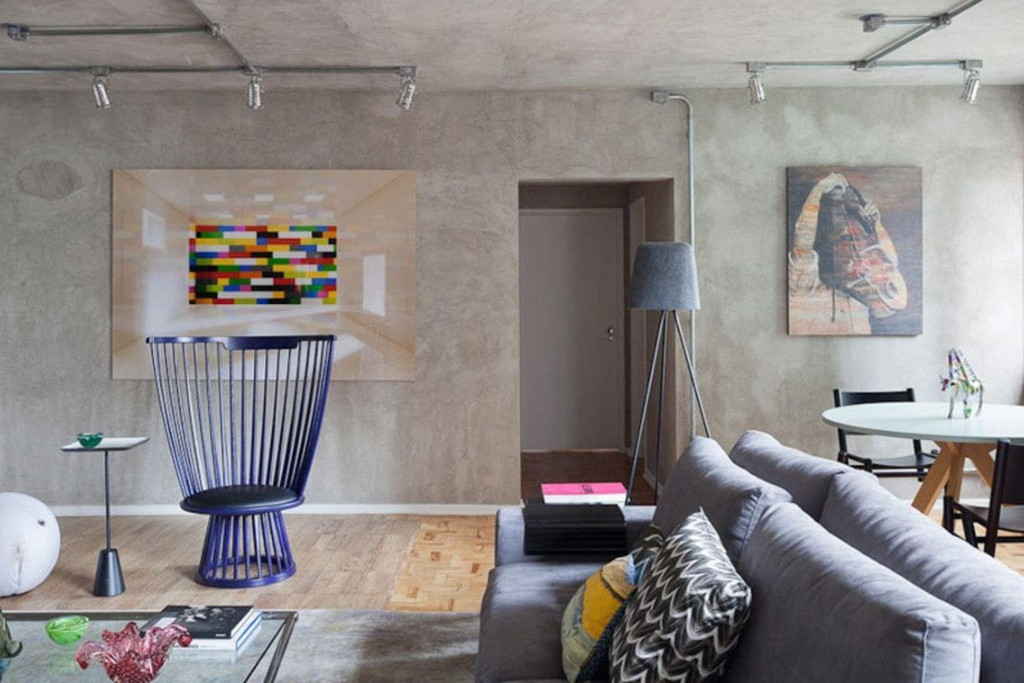
I used to love microcement. For years it was one of the finishes I reached for repeatedly because it could create a continuous, contemporary surface with very little visual noise.
I still understand why clients and designers are attracted to it. It can make floors, walls and built-in elements feel calm and architectural. But after years of specifying it and seeing it behave in real projects, my relationship with the material has changed.
If you are searching for the advantages and disadvantages of microcement, the most important thing to understand is this: microcement is a finish. It does not make the building underneath it stop moving.
The aesthetic advantage is obvious: continuity. There are fewer visual interruptions than with tile, and that can make a small bathroom, wall or floor feel larger and more refined.
It is also versatile. Depending on the system and substrate, it can be used on different surfaces and can create a very clean, modern result without adding a lot of visual texture.
For clients who genuinely love that seamless look, microcement can still be a good material. I simply no longer treat it as the automatic answer to every contemporary interior.
My biggest concern is cracking.
Microcement is thin and relatively rigid. It can be applied over different substrates, but those substrates continue to behave differently. A concrete column and a gypsum wall do not necessarily move in the same way. Buildings also experience normal settlement and, depending on location, seismic movement.
When two materials meet, the joint underneath does not disappear just because the decorative finish above it is continuous.
Good preparation reduces risk. It does not erase physics.
Cracks are usually not a question of the color or brand you selected. They are connected to what is happening underneath: substrate movement, transitions between materials, existing cracks, poor preparation, structural movement or an inappropriate system for the condition.
This is why I am cautious when someone promises a perfectly seamless surface without first talking about the substrate.
The installer matters enormously, but even an excellent installer cannot promise that a decorative finish will never reflect movement from below.
It can be used in bathrooms when the complete system is appropriate for wet areas and the substrate, waterproofing and installation are correctly resolved.
But I would never use microcement as an excuse to simplify the invisible technical work. Waterproofing, drainage, slopes and transitions still have to be designed properly before the finish is applied.
If the goal is very low maintenance, large-format porcelain may sometimes be the more practical answer because it gives a calm surface with fewer joints while using a more conventional wet-area system.
See our bathroom renovation guide for the technical decisions I resolve before finishes.
Yes—when the project, substrate, installer and desired effect make sense.
Panama adds another layer to the decision because humidity, air conditioning, condensation and building conditions all influence how interiors age. I do not believe every material has to be rejected because the climate is tropical, but I do believe the climate has to be part of the specification from the beginning.
Read more in our guide to designing for humidity in Panama.
Experience changed my taste as much as it changed my technical judgment. Materials that once feel fresh eventually become familiar. Personally, I got a little bored with microcement.
If a project gives me beautiful genuine concrete, I would rather celebrate the real material than imitate it. I am also increasingly interested in finishes such as limewash, where subtle variation, color and texture can create softness without pretending to be perfectly uniform.
That does not make microcement a bad material. It means I now ask a more useful question: is this the right material for this exact project, or are we choosing it because it is fashionable?
I do not choose materials from a sample or Pinterest image alone. I want to understand the substrate, humidity, movement, maintenance, installer, client lifestyle and how the material will age in the real building.
That is the difference between specifying a finish because it looks good today and designing an interior that still feels good years later.
Explore our residential projects in Panama or contact PIEKNO Studio about a renovation.

We work with clients who value clarity, experience, and thoughtful design decisions. If that sounds like you, let’s talk.
Request a Design Strategy CallYour trusted source for curated news and insights.
We work with clients who value clarity, experience, and thoughtful design decisions. If that sounds like you, let’s talk.
Request a Design Strategy Call