April 28, 2023
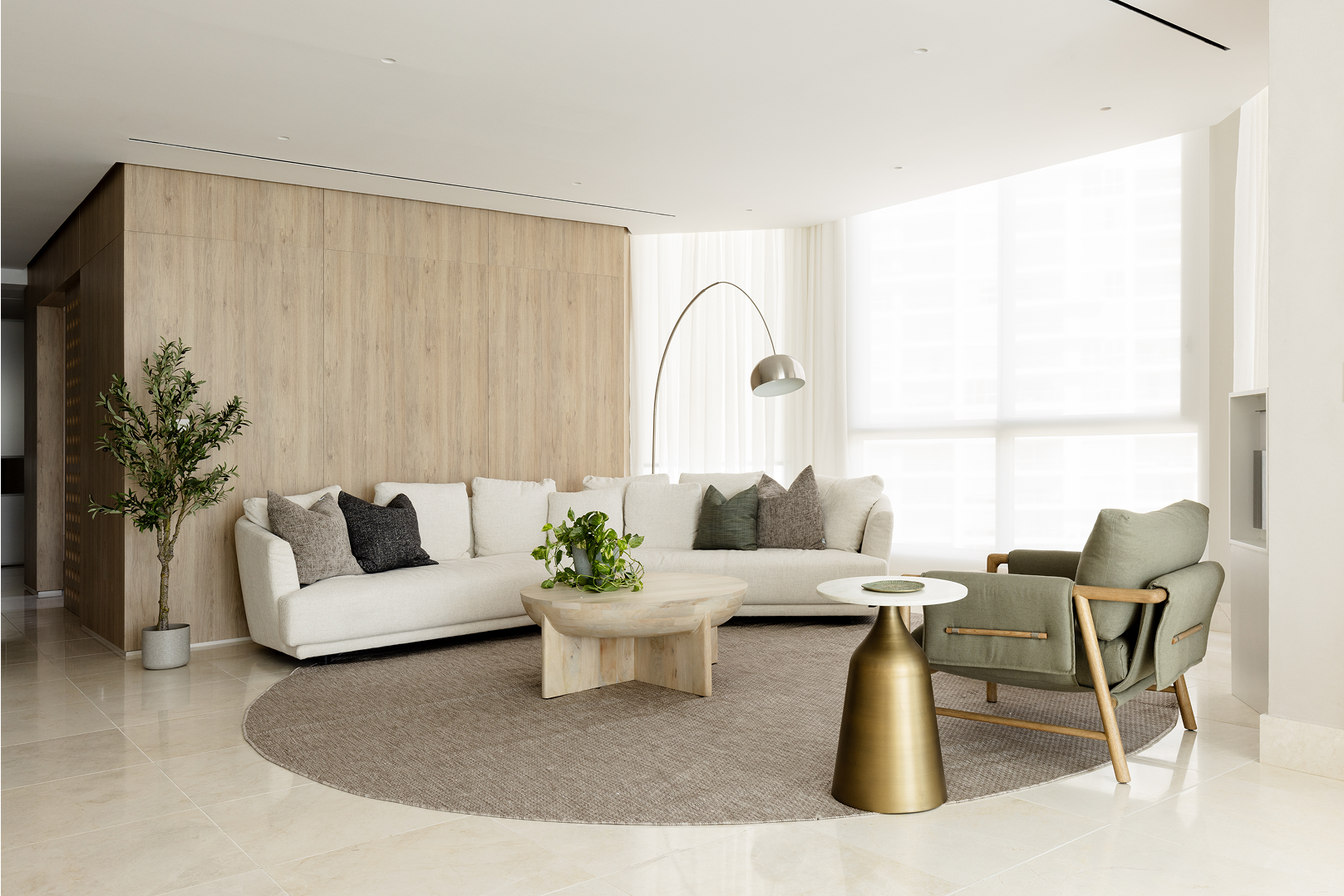
Neutral interiors can be incredibly warm—or they can feel clinical. The difference is rarely the color white itself.
When you remove strong color from a room, texture has to work much harder.
A warm neutral interior can contain white, ivory, sand, stone, oatmeal and a million shades of beige. Those subtle differences create depth without making the room visually busy.
Natural wood changes the emotional temperature of a pale interior immediately. In projects such as our Pacific Point apartment, restrained colors work because the timber, textiles and natural textures keep the space from feeling flat.
Linen curtains, woven upholstery, matte plaster, timber grain, stone, cement and soft rugs all react to light differently. That variation is what makes a monochromatic room feel layered.
If everything is the same smooth white surface, the room can start to feel like a clinic.
Glossy white surfaces reflect light strongly and can make an already pale room feel colder. I usually prefer matte or softly textured finishes for large areas, then use reflection selectively where it adds something.
A quiet palette creates space for art, furniture, views and the people living there. The goal isn't to remove character. It is to create enough depth that the room still feels rich without relying on strong color.
See our Pacific Point Japandi project, read about Japandi interiors, or explore our portfolio.
We work with clients who value clarity, experience, and thoughtful design decisions. If that sounds like you, let’s talk.
Request a Design Strategy CallYour trusted source for curated news and insights.
We work with clients who value clarity, experience, and thoughtful design decisions. If that sounds like you, let’s talk.
Request a Design Strategy Call